Read the routeMove & fightRefine the runImprove the time
01 / CORE GAMEPLAY
Movement as the foundation
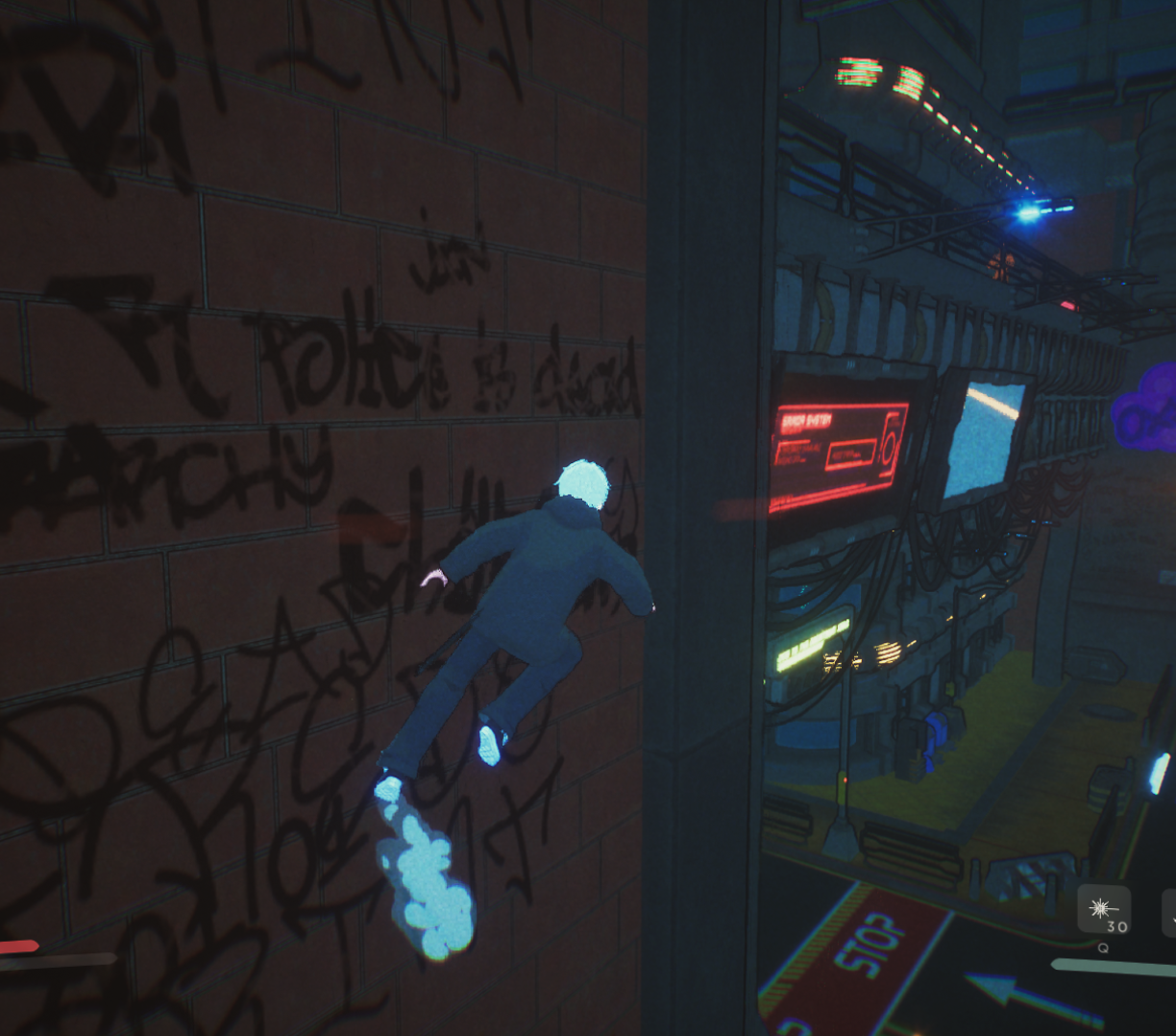
I designed and implemented the parkour controller, input handling and checkpoints. Wall runs, dashes, slides, ledge grabs and wall jumps give players different ways through a level. The project was originally shown as Vexar; as movement became its strongest feature, I steered it toward time-attack play.
I integrated melee combat and enemy AI with the traversal system. I also prototyped abilities such as an exploding nano knife, blink teleport and time rewind. The aim was to let players use them during a run without bringing their movement to a halt.
MELEE & ENCOUNTERS
Close-range combat against an enemy prototype in the traversal test environment. Dialogue devlog, approximately 0:14.
I built the dialogue system with character portraits, speaker names, gradually revealed text and highlighted words. Players can change the playback speed, turn on auto-advance or skip ahead. The video shows it running alongside the combat prototype.
DIALOGUE PRESENTATION
Character-led dialogue with highlighted text and pacing controls. Dialogue devlog, approximately 0:37.
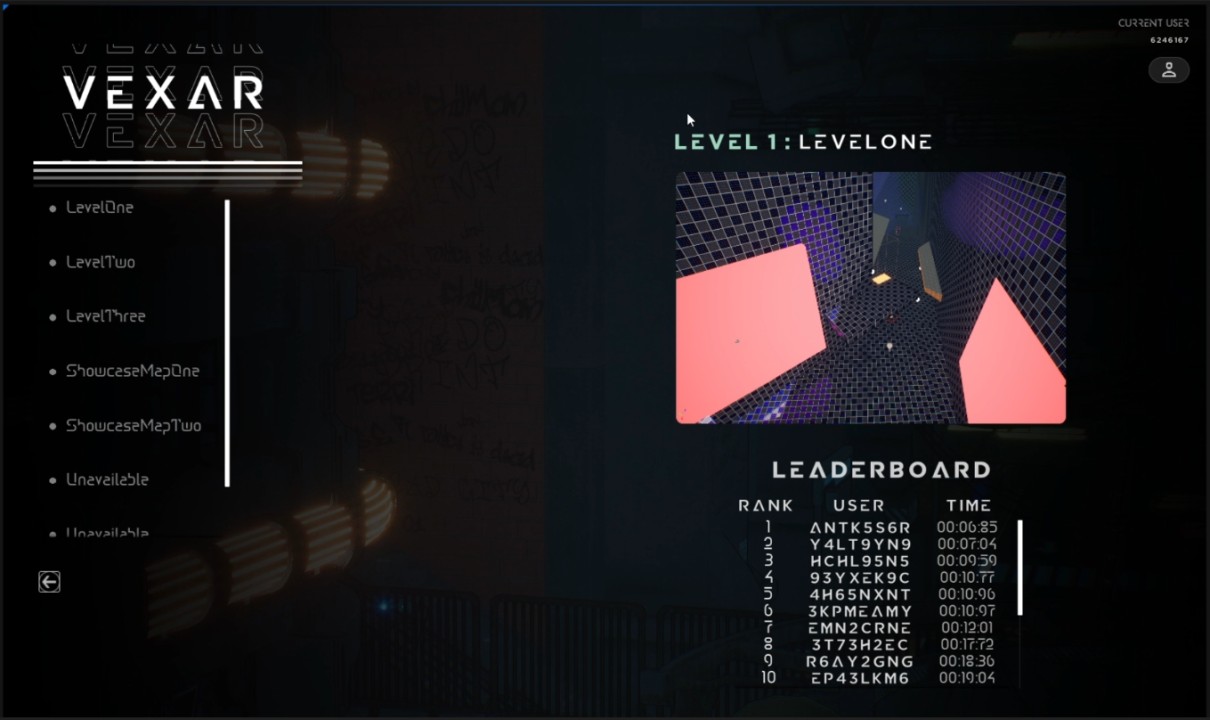
I implemented account creation, hosted data and a global leaderboard in the level browser. Those features were running in the development build shown here. Steam and Epic Online Services integration were still planned at that stage.
Watch development video ↗Level browser, online functionality and global leaderboard — development update.
DESIGN RATIONALE
Let the route become the challenge.
The idea is to learn a route, find better ways through it and bring your time down. Movement, combat and abilities all feed into that run. The level browser and leaderboard give players somewhere to choose their next challenge and compare their progress; community-made levels were part of the longer-term plan.